Aventra Raises $17.5M to Start Production of Balloon-Launched Piranha
Konvoy led the raise. Booz Allen Ventures, Sands Capital and Langford Industries came in as new investors.
- Country
- United States
- Investors
- Konvoy (lead), Lavrock Ventures, Booz Allen Ventures, Sands Capital, Langford Industries; funding facility from Western Alliance Bank
- Company
- Aventra Defense Systems
- What it builds
- Piranha, a balloon-launched autonomous glider
- Amount
- $17.5 million
- Round
- Strategic round
- Valuation
- Not disclosed
- Announced
- October 6, 2026
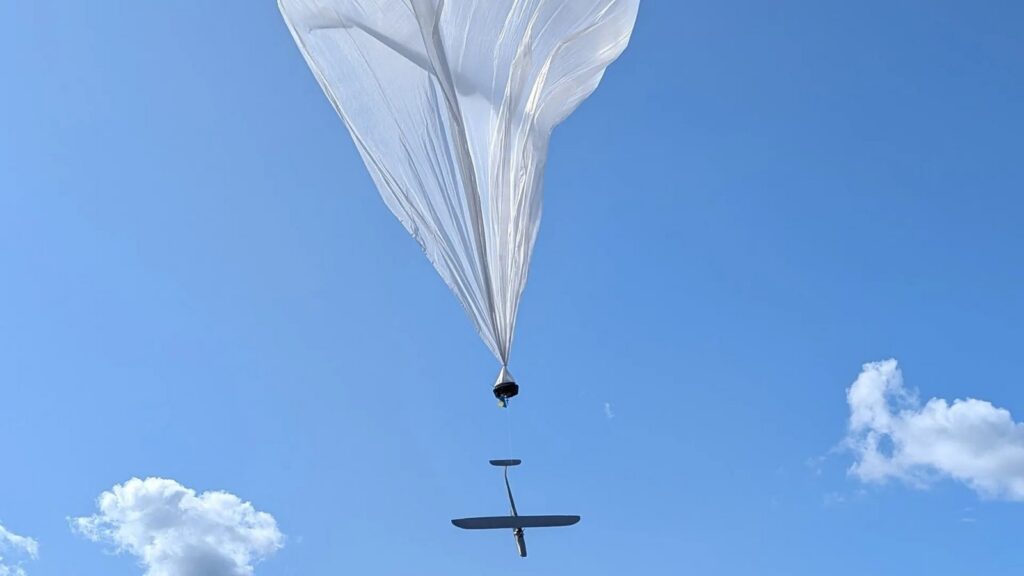
Aventra Defense Systems has raised $17.5 million to move its Piranha glider into low-rate initial production, the company said on October 6.
Konvoy led what Aventra called a strategic fundraise. Lavrock Ventures, an existing backer, invested again. Booz Allen Ventures, Sands Capital and Langford Industries are new investors, and Western Alliance Bank provided a funding facility. The company did not disclose a valuation.
Piranha is carried up by a high-altitude balloon and then released to glide to its target on its own. Aventra says this lets the system ride stratospheric winds over long distances without burning fuel the whole way, which keeps the cost down. It can carry payloads for surveillance, electronic warfare or strike.
First delivery contracts
Aventra said it has won its first delivery contracts. It did not name the customers or give values or quantities.
The money will pay for more work at the company’s site in Herndon, Virginia, more flight tests, and the qualification of surveillance, electronic warfare and kinetic payloads. Aventra also plans to hire engineers and production staff, and to begin work on a platform it has not announced.
“Today’s conflicts and the wars of the future will be won with volume, persistence, and affordability,” chief executive Michael Weigand said.
In April, US Army soldiers put together and launched Piranha systems using several kinds of high-altitude balloon, according to the company. The gliders then flew themselves over long lateral and vertical distances during surveillance and strike missions.

Raising, or looking for your first contract?
DefMatch is the Defense Capability Exchange from The Defense Post. Find your company profile, claim it, and get in front of buyers and partners.